08
Jul
PROJECT UPDATE: Performance Based Timber Design Enabled by AI, AR and Human–Machine Collaboration
ARC Advance Timber Hub Project 6.7 “Performance Based Architectural Design and Optimization Using Biomaterial and AR Assisted Discrete Assemblies” is developing new digital‑to‑physical design and construction workflows for timber buildings, integrating performance‑based design, biomaterials, augmented reality (AR) and human–machine collaboration to improve efficiency, accuracy, and sustainability in construction.
Dr Nic Bao, from RMIT, updated ARC Advance Timber Hub Stakeholders on the research via a webinar presentation on the 20th May 2026. Dr Bao showcased how the project explores how advanced computation, artificial intelligence (AI), and immersive technologies can support lighter, more material‑efficient timber structures and enable more precise on‑site assembly.
The project has four key objectives:
- Design and Optimize Prefabricated Timber Design through computational design and topology optimisation, reducing material use and structural weight
- Integrate Discrete Assemblies for Modular Architecture, developing digital tools to designing processing workflows and assembly methods
- Use AR‑assisted assembly tools to improve accuracy and efficiency in the construction of modular timber components, aiming to reduce construction time and errors
- Establish a centralised information workflow, that integrates design, fabrication, and construction data to optimise design-to-delivery of prefabricated timber buildings.
Research Progress and Activities
The project team has delivered and tested multiple timber prototypes demonstrating performance‑driven structural optimisation and discrete assembly logic. Earlier prototypes explored optimised timber structures with advanced joint systems, AI‑assisted assembly strategies, and robotic handling of timber components. Recent work has expanded into human–machine collaborative construction, combining:
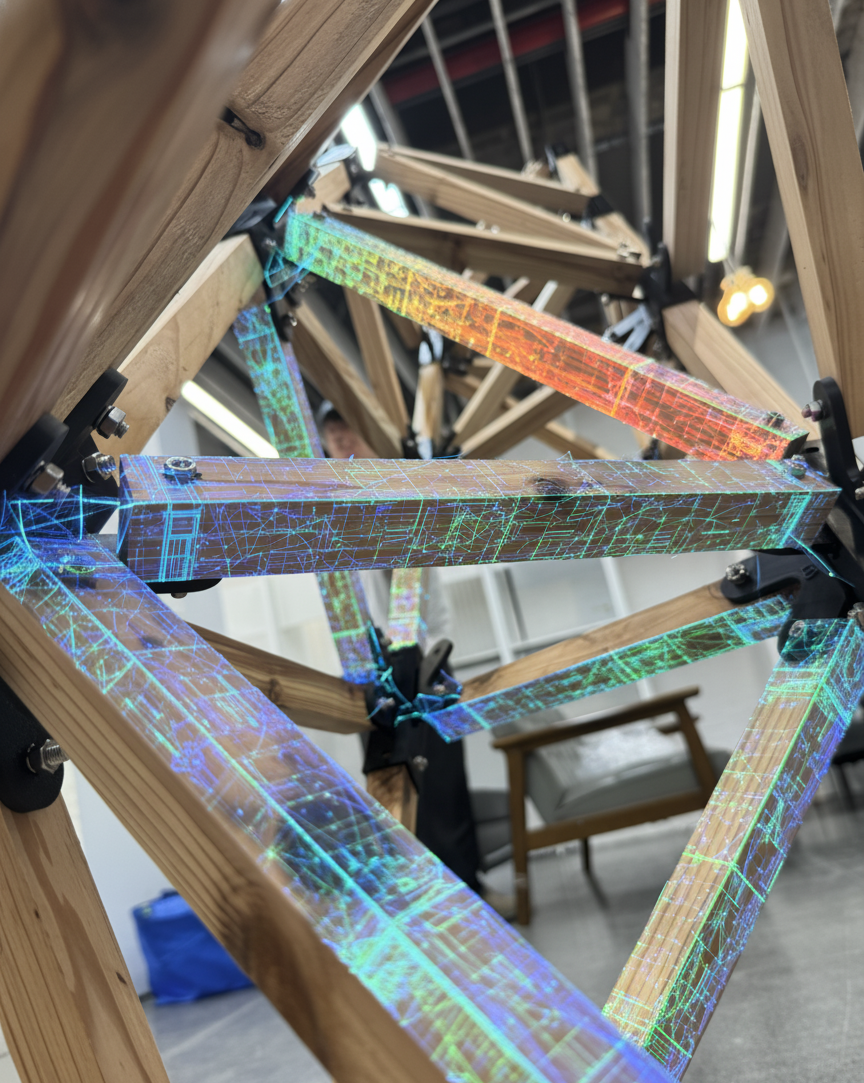
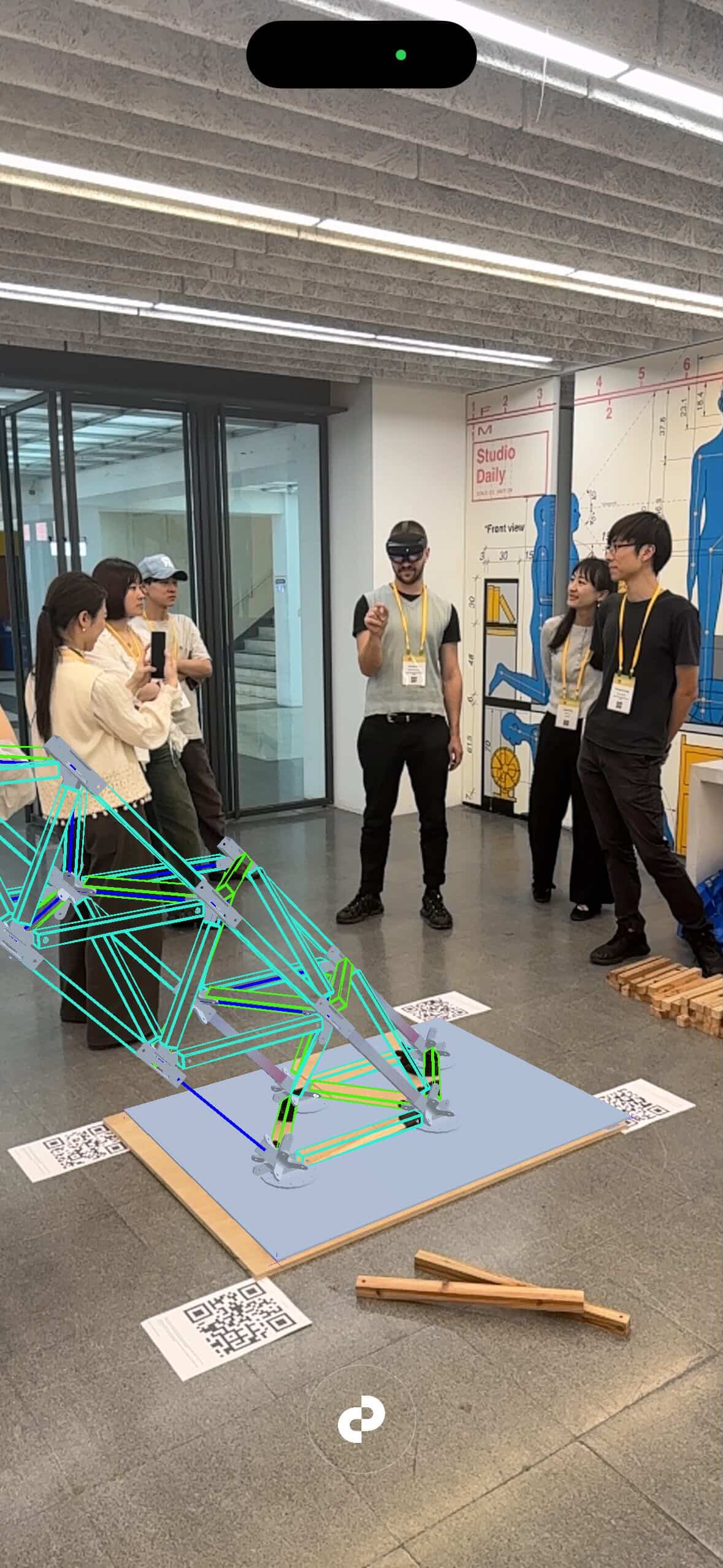
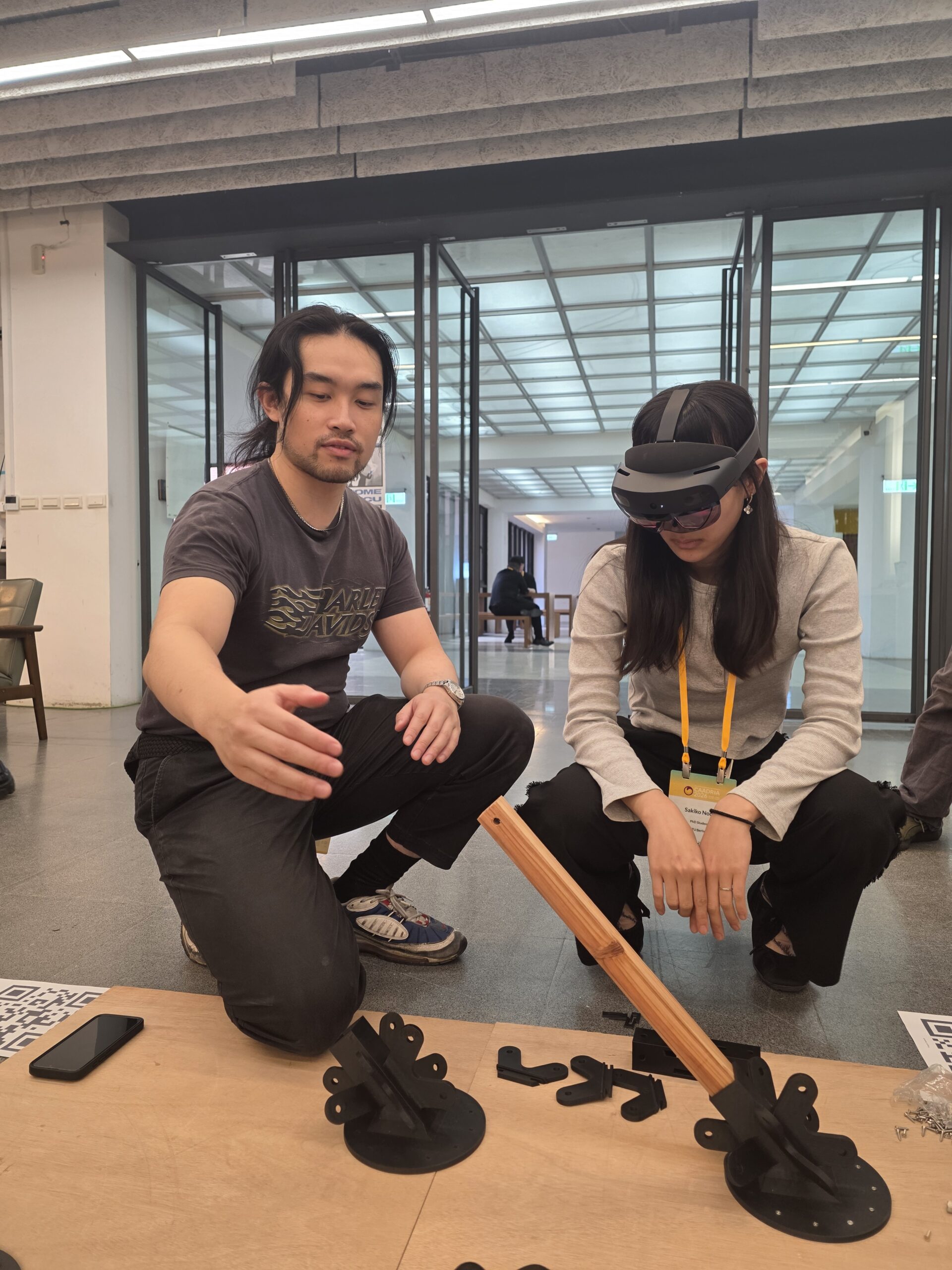
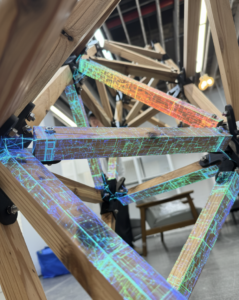
- AR‑guided assembly using head‑mounted displays
- Self‑developed robotic systems to assist with timber placement in inaccessible areas
- Real‑time structural feedback during assembly, linking physical construction with digital performance models
These workflows have been demonstrated through international workshops and conference‑linked fabrication activities, including a 30‑day collaborative assembly project completed by a small student team, combining on‑site and remote participation.
Engagement, dissemination and outcomes
Project outcomes have been widely shared through:
International conferences, workshops and exhibitions, including the recent CAADRIA 2026 (Computer-Aided Architectural Design Research in Asia Annual Conference 2026 “Humanistic Computation and Intelligence”)
CAADRIA 2026 – Human–Machine Collaborative Timber Structure Assembly Using Relative Robotic System
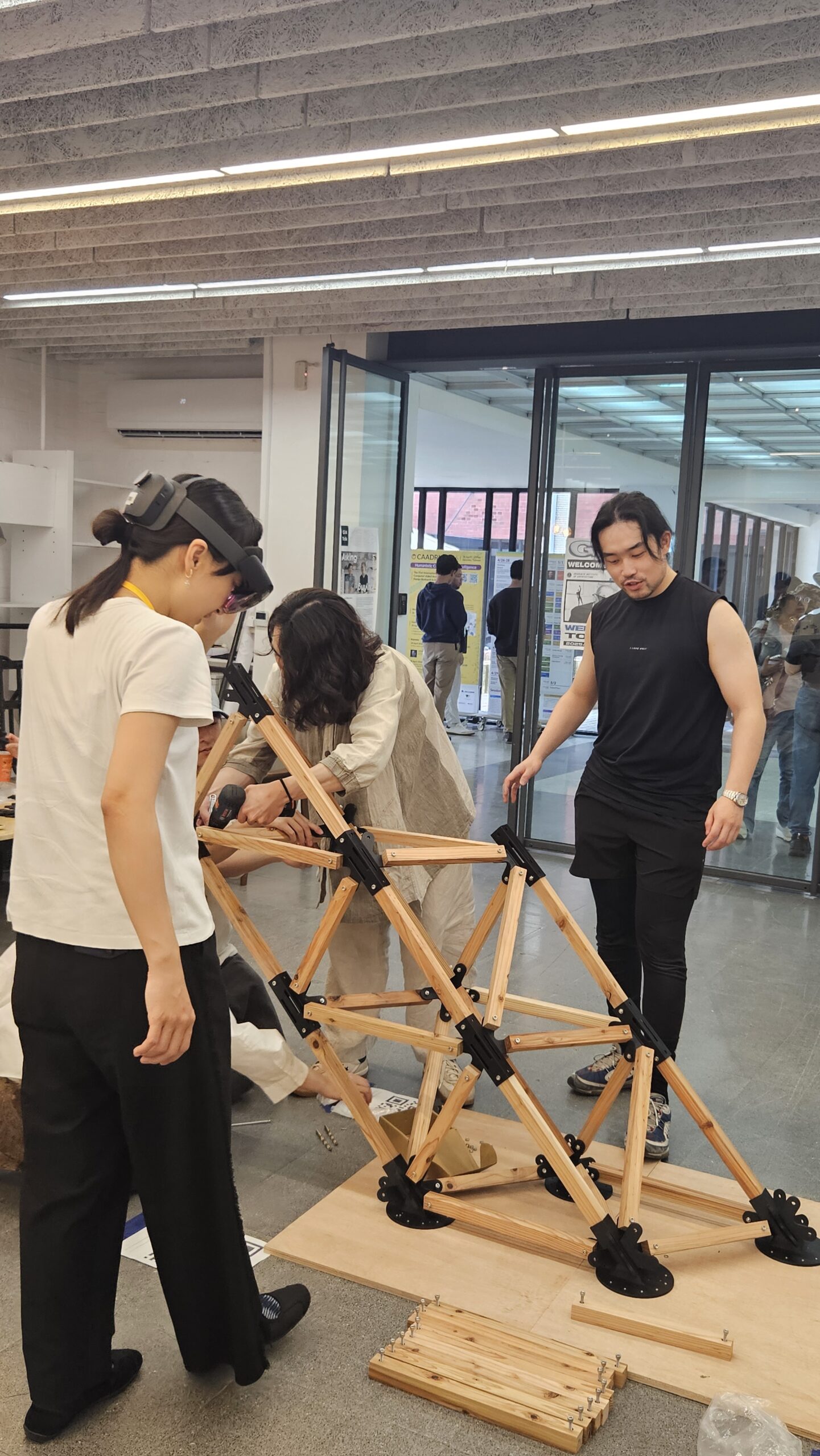
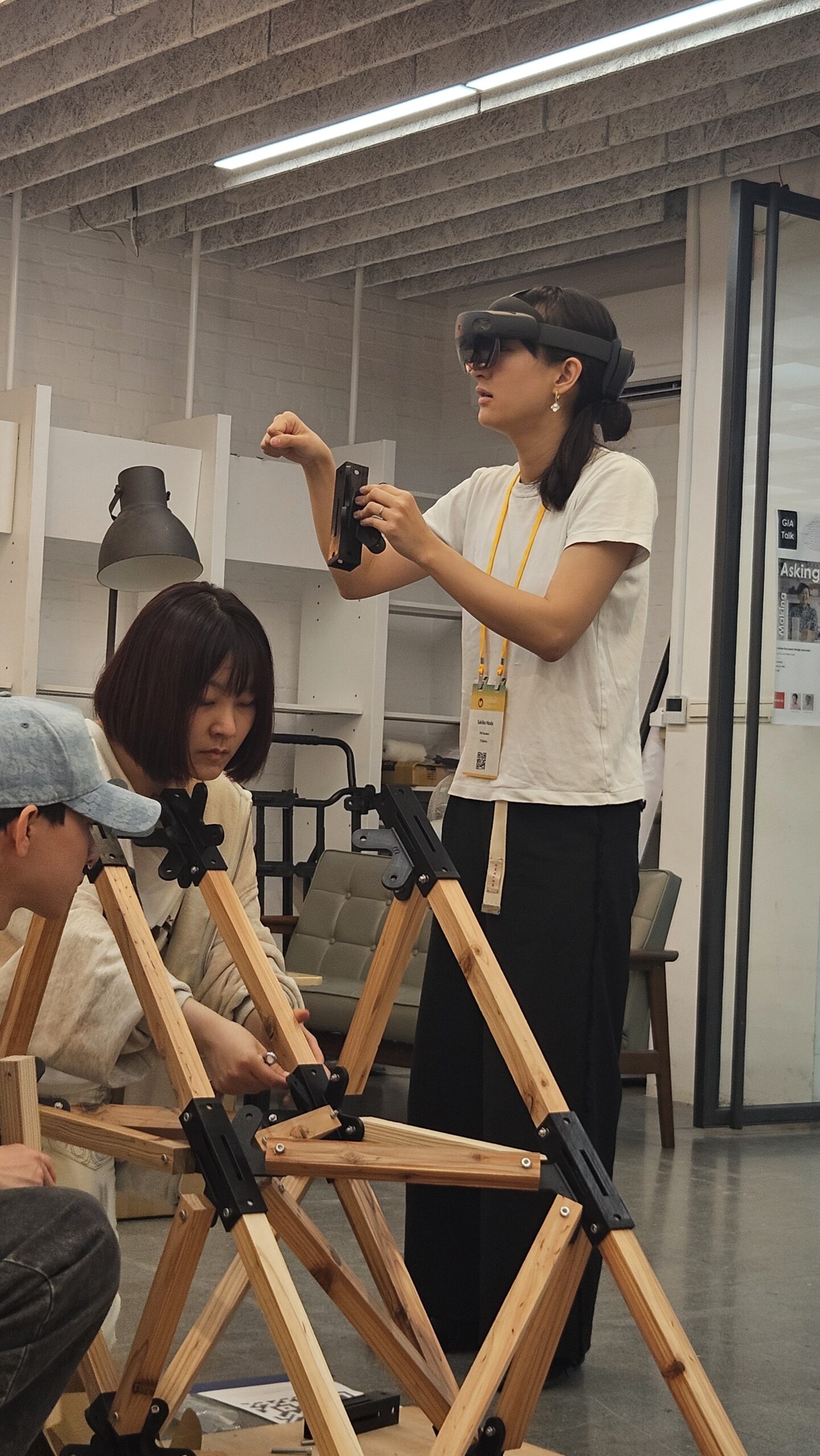
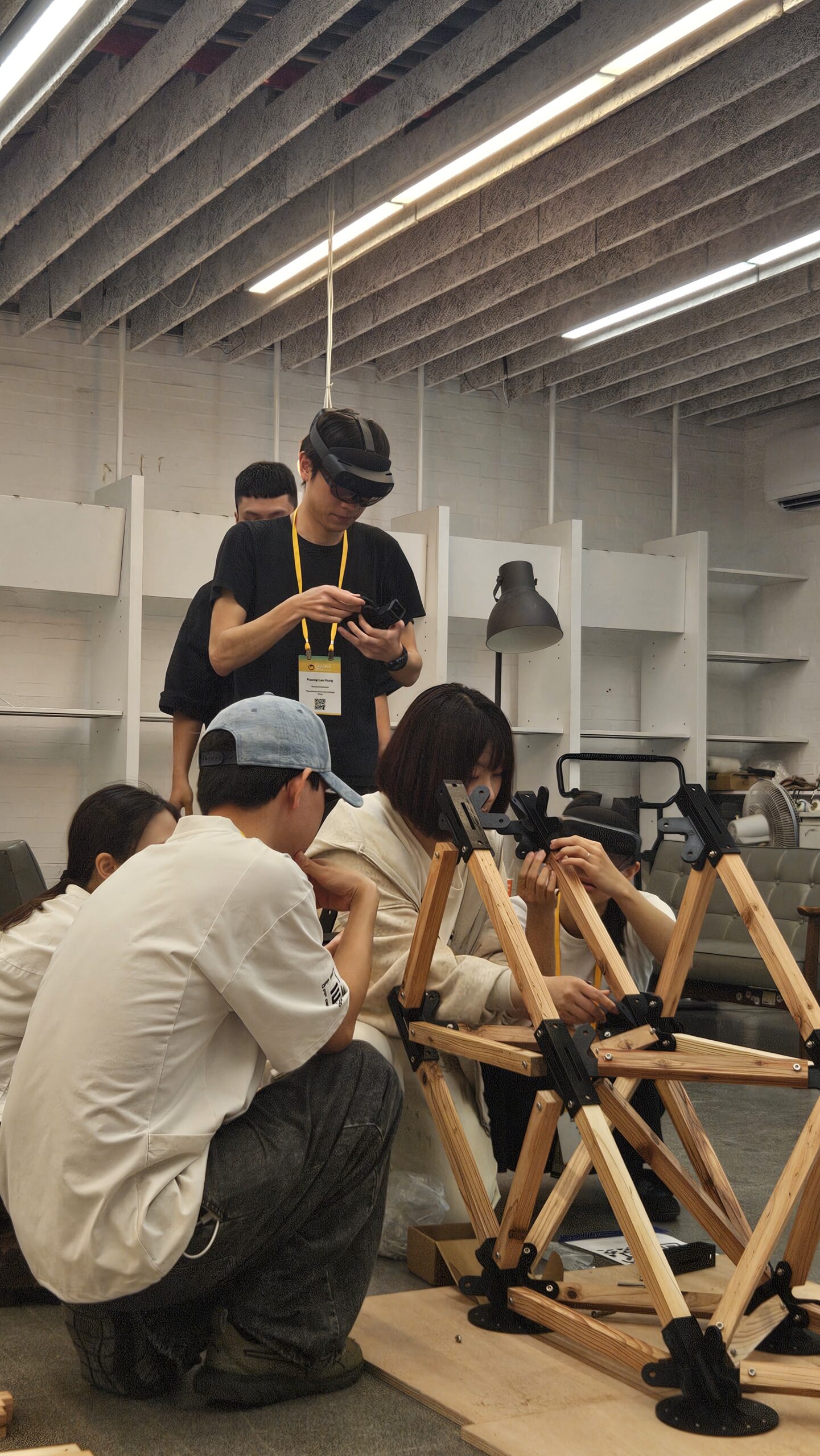
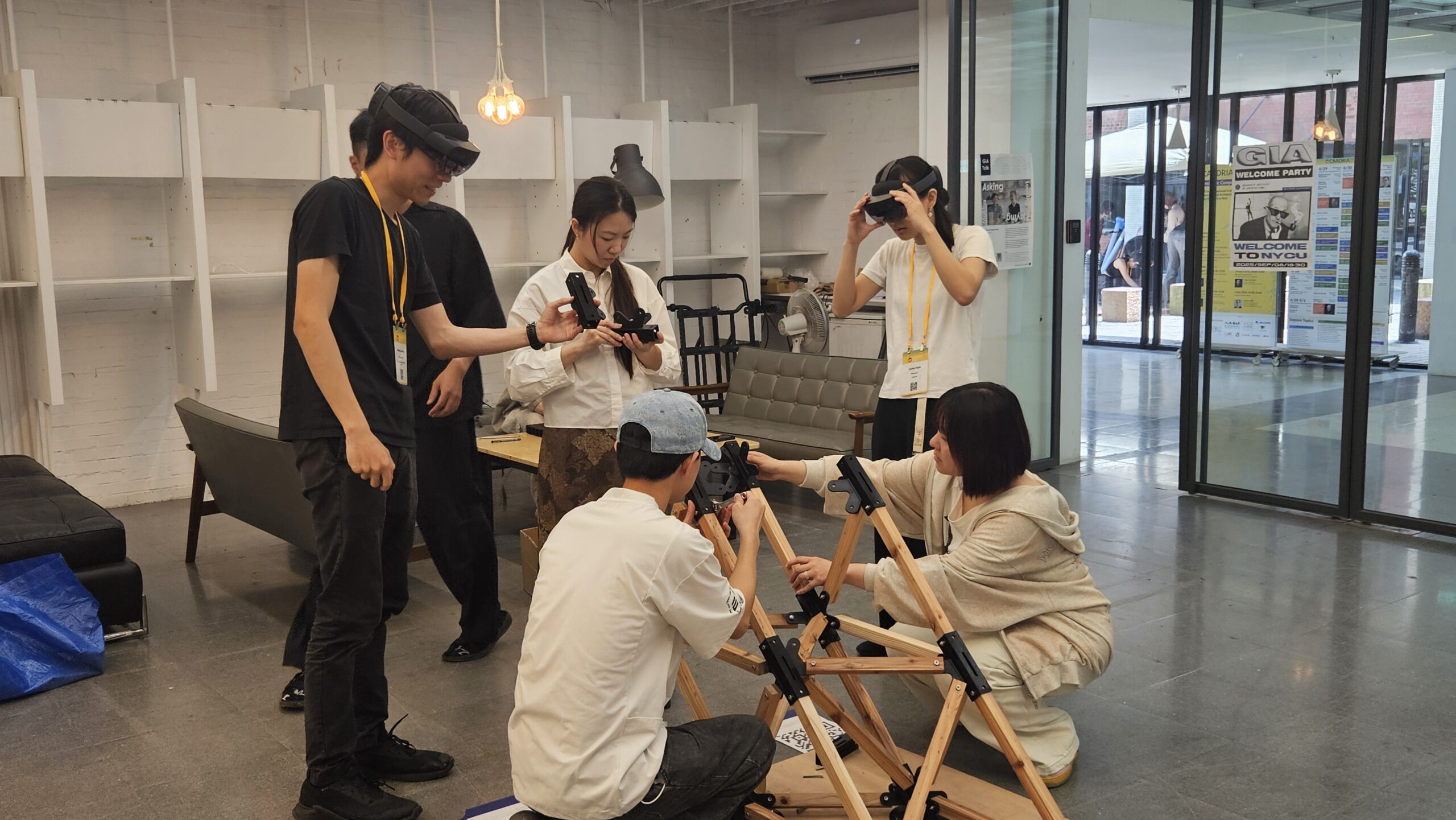
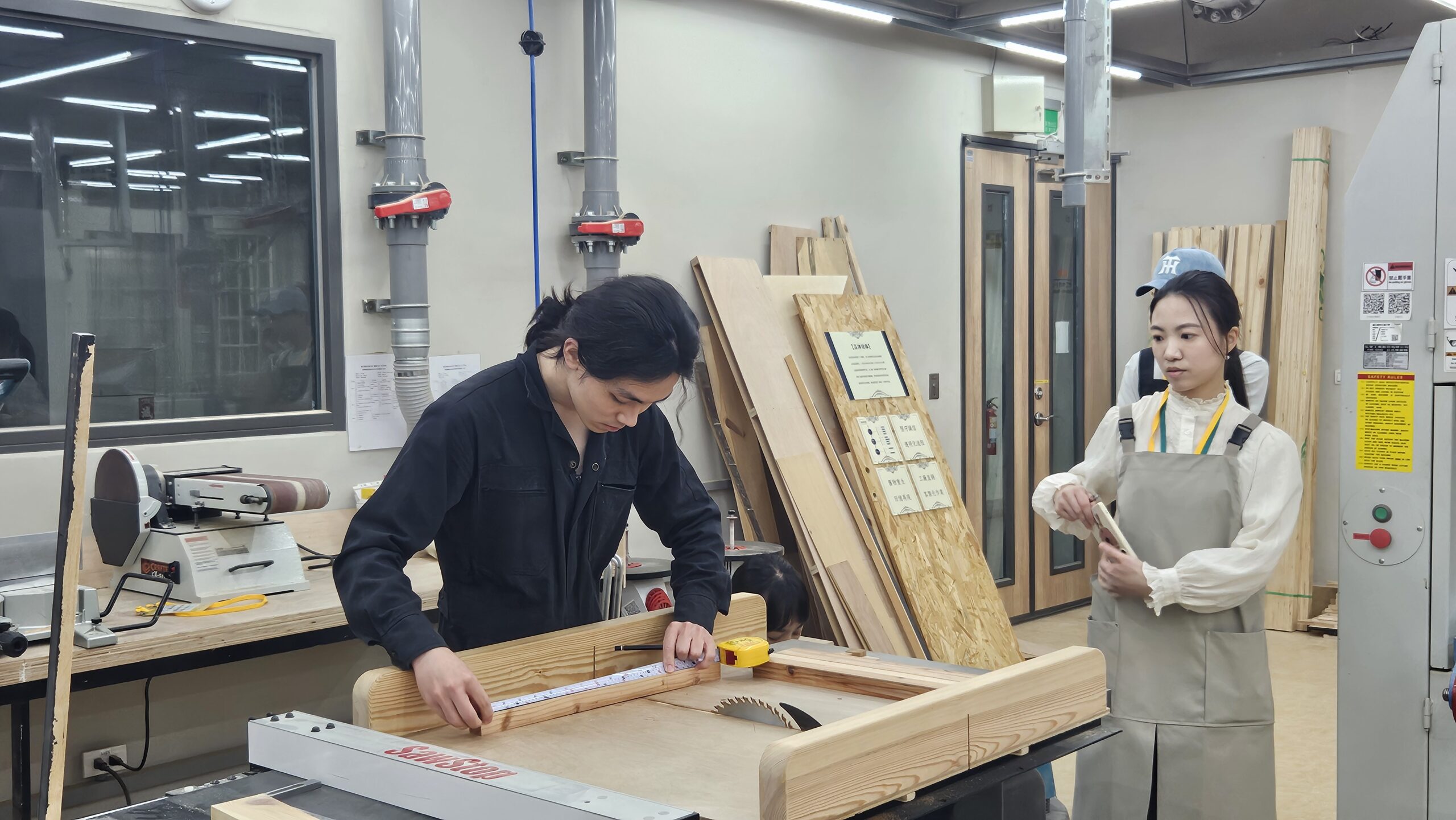
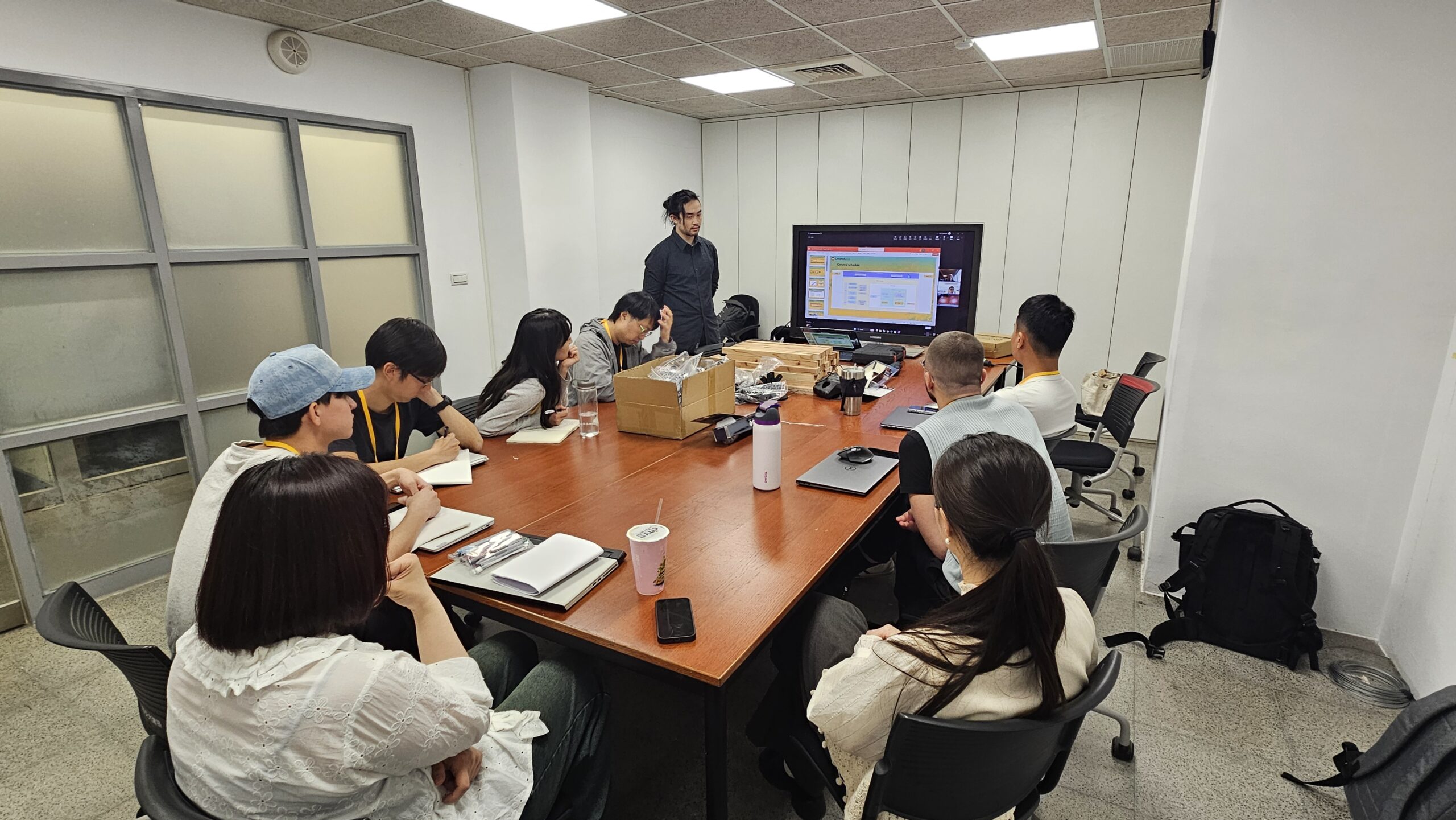
During CAADRIA 2026, the project team led the workshop “Human–Machine Collaborative Assembly Using Relative Robotic System”, which explored robotic modular assembly for timber structures. Due to travel-related constraints, the workshop was adapted from an originally in-person format into a hybrid model, combining on-site AR-assisted assembly with remote robotic operation using our self-developed relative robotic system.
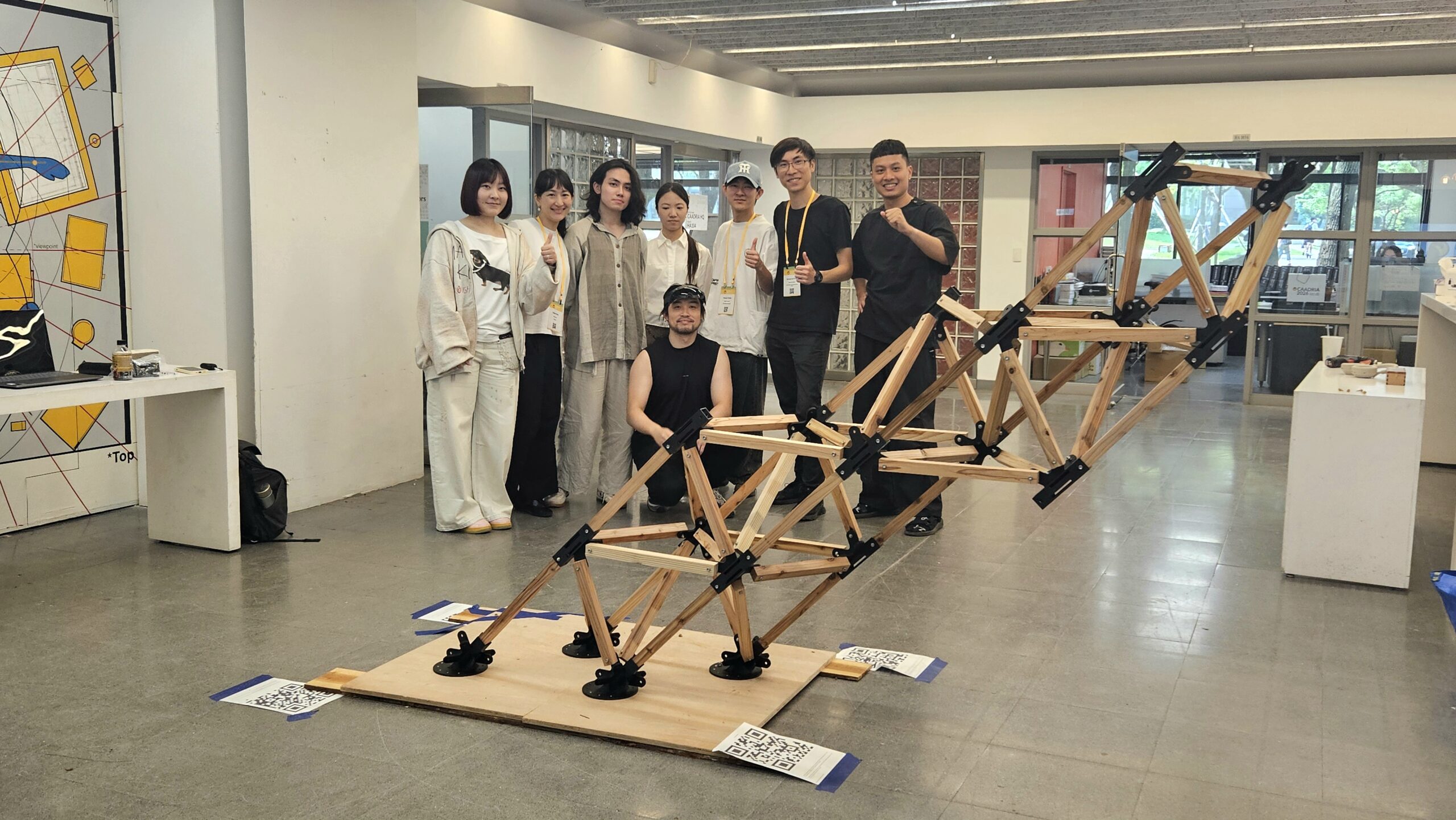
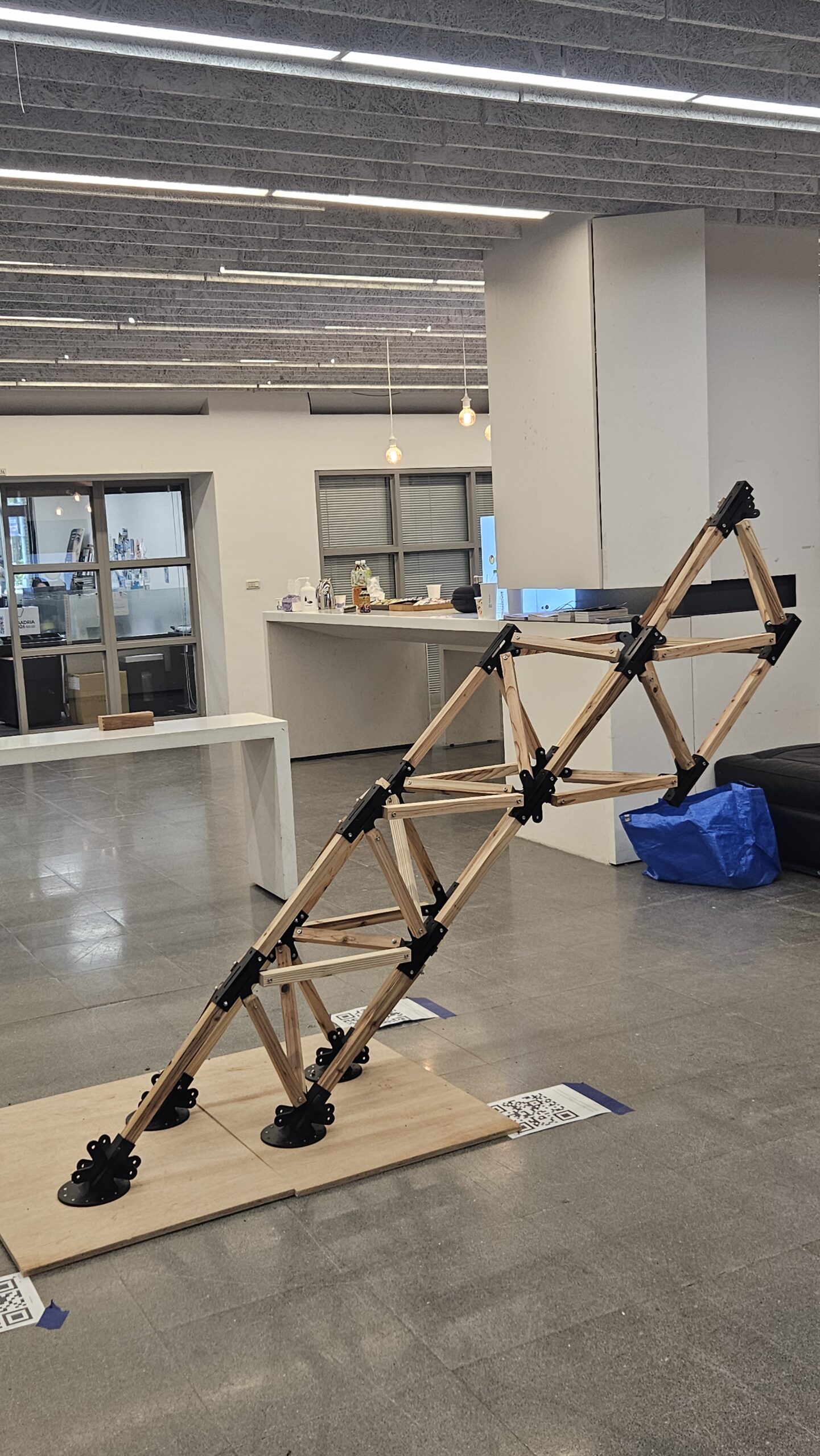
The workshop was led by Dr Ding Wen ‘Nic’ Bao and Prof Yi Min ‘Mike’ Xie, and the teaching team Harlan Zhaonan Guo, Jason Zhan, and Yang Yu. Together with the participants, the team constructed two small-scale timber prototypes using 3D-printed joints, mixed-reality guidance, and robotic assembly workflows. The prototypes served as testbeds for the broader research agenda within the ARC Advance Timber Hub, particularly under the Manufacturing Innovation research node 6.7 Project, which investigates future pathways for timber architecture, adaptive structures, and scaffold-free construction.
The workshop introduced participants to relative robotic systems, a construction approach in which robots navigate directly on partially assembled structures rather than relying on fixed ground-based reference frames. This enables more adaptive, mobile, and spatially responsive assembly processes. Participants worked in groups to develop assembly strategies for a modular timber truss system, using parametric design tools, robotic simulation, mixed-reality workflows, and on-site prototyping to evaluate feasibility.
A related peer-reviewed paper, “Parametric Joint Design for Irregular Timber Mixed-Reality Integration for Adaptive Human–Machine Assembly”, by Harlan Guo, Nic Bao and other co-authors, was accepted and presented at CAADRIA 2026.
Publication link:
https://papers.cumincad.org/data/works/att/caadria2026_508.pdf
Workshop link:
https://docs.google.com/document/d/1hdpIZliaQX8TCNz-Ti24pKDMc3rZxYRJI-lLOKhdI64/edit?usp=drive_link
Teaching team: Harlan Zhaonan Guo, Jason Zhan, Yang Yu
On-site AR fabrication lead: Harlan Guo (on site)
Remote robotic fabrication lead: Jason Zhan (remote)
Fabrication Team: Fabrication Lead: Harlan Guo
Participants: Huanyang Li, Juntao Li,Kwong Lau Hung, Masaya Tanaka, Mengdi Mao, Mohamed Aboeloyoon, Pok Yin Victor LEUNG, Sakiko Noda, Samuel Leder, Sherlock Tsai, Ting-l)
Tsai, Yi Ru Liao
Technical support: Fologram and Karamba3D
Academic support: RMIT University RMIT Architecture RMIT College of Design and Social Context National Yang Ming Chiao Tung University
In addition, Dr Nic Bao was honoured to have been re-elected as the Secretary of CAADRIA for another term, and advised “It is a privilege to continue serving the CAADRIA community and supporting the development of computational design research across the Asia-Pacific region.”
International conferences, workshops and exhibitions, cont.
- News on Wood Central Platform – Future ‘Out-of-Grade’ Timbers Can Be Used in Long-Span Structures – https://woodcentral.com.au/future-out-of-grade-timbers-can-be-used-in-long-span-structures
- Melbourne Design Week, Reimagining Timber – https://www.rmit.edu.au/news/all-news/2025/apr/return-to-melbourne-design-week
- World Conference on Timber Engineering Expo, Reimagining Timber – https://www.advance-timber-hub.org/hub-news/reimagining-timber-adaptive-structures-from-out-of-grade-wood
Peer‑reviewed publications
- Conference Paper: REIMAGINING TIMBER: AN INTEGRATED APPROACH OF RESOURCE EFFICIENT FABRICATION PROCESS FOR TOPOLOGICALLY OPTIMISED CROSS-LAMINATED TIMBER SLABS
- Conference Paper: ARCHITECTURAL TOPOLOGICAL FORM-FINDING INTEGRATING SOLID STRUCTURAL PERFORMANCES
- Journal Article: TRANSFORMING ARCHITECTURE: THE ROLE OF INTERDISIPLINARY COLLABORATION IN DESIGN AND FABRICATION.
Industry Impact
This project positions timber as a high‑performance, digitally enabled construction material for contemporary architecture. By demonstrating integrated workflows from design through to assembly, and by combining AR, robotics, and performance‑based optimisation, the research demonstrates how emerging technologies can:
- Reduce material use and structural weight in timber systems
- Improve construction accuracy and reduce on‑site errors
- Enable more flexible, modular, and scalable timber architectures
- Support future digitally enabled construction practices in Australia and internationally
Next steps
The project team is progressing toward larger‑scale assembly demonstrations, expanded robotic integration, and further industry‑relevant prototypes, alongside continued HDR training and international collaboration. For more information, please view “Performance Based Architectural Design and Optimization Using Biomaterial and AR Assisted Discrete Assemblies”.
Image credits / above image: CAADRIA 2026 / Harlan Guo