ARC Advance Timber Hub Showcases Research at Queensland Parliament House

The ARC Advance Timber Hub, together with The University of Queensland School of Civil Engineering, demonstrated a strong presence at Queensland Parliament House on Tuesday 9 December 2025, engaging directly with key government stakeholders to highlight The University of Queensland’s (UQ) Productivity in Practice Solutions Showcase.

ARC Advance Timber Hub representatives who attended the event included Associate Professor Joe Gattas (Theme Leader- Innovative Solutions and Node Leader Manufacturing Innovation & Value-Chain Innovation) and Kelly Rischmiller (Research Hub Manager).

The night involved meeting with Queensland Government Ministers, Shadow Ministers and Members of Parliament to showcase driving productivity, which is key to Queensland’s future, key to improving our way of life and key to lifting our standards of living.

As the ARC Advance Timber Hub is administered by UQ, it was proudly included in this showcase, which included:

  • deep policy expertise to shape productivity enhancing reforms,
  • research to create new technologies and innovation solutions,
  • teaching and learning options that give people the skills they need to be productive in the workplace.

For a summary of UQ’s productivity capabilities, and case study examples of the projects helping to drive productivity on the ground across Queensland, please see, Productivity for Queensland’s Future‘.

Reflecting on the importance of the event, Associate Professor Joe Gattas said, “Engaging directly with ministers and Members of Parliament is critical to ensuring the value of timber and timber research is well understood. Events like this allow us to clearly demonstrate how our research is supporting industry innovation and helping to position timber as a key material in Australia’s sustainable construction future.”

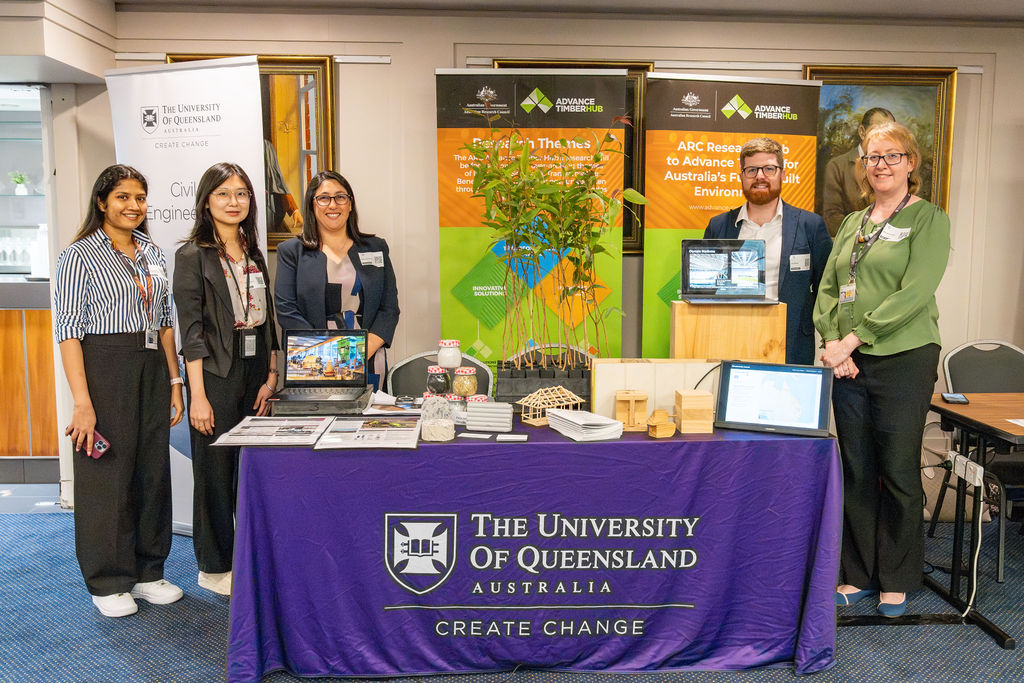
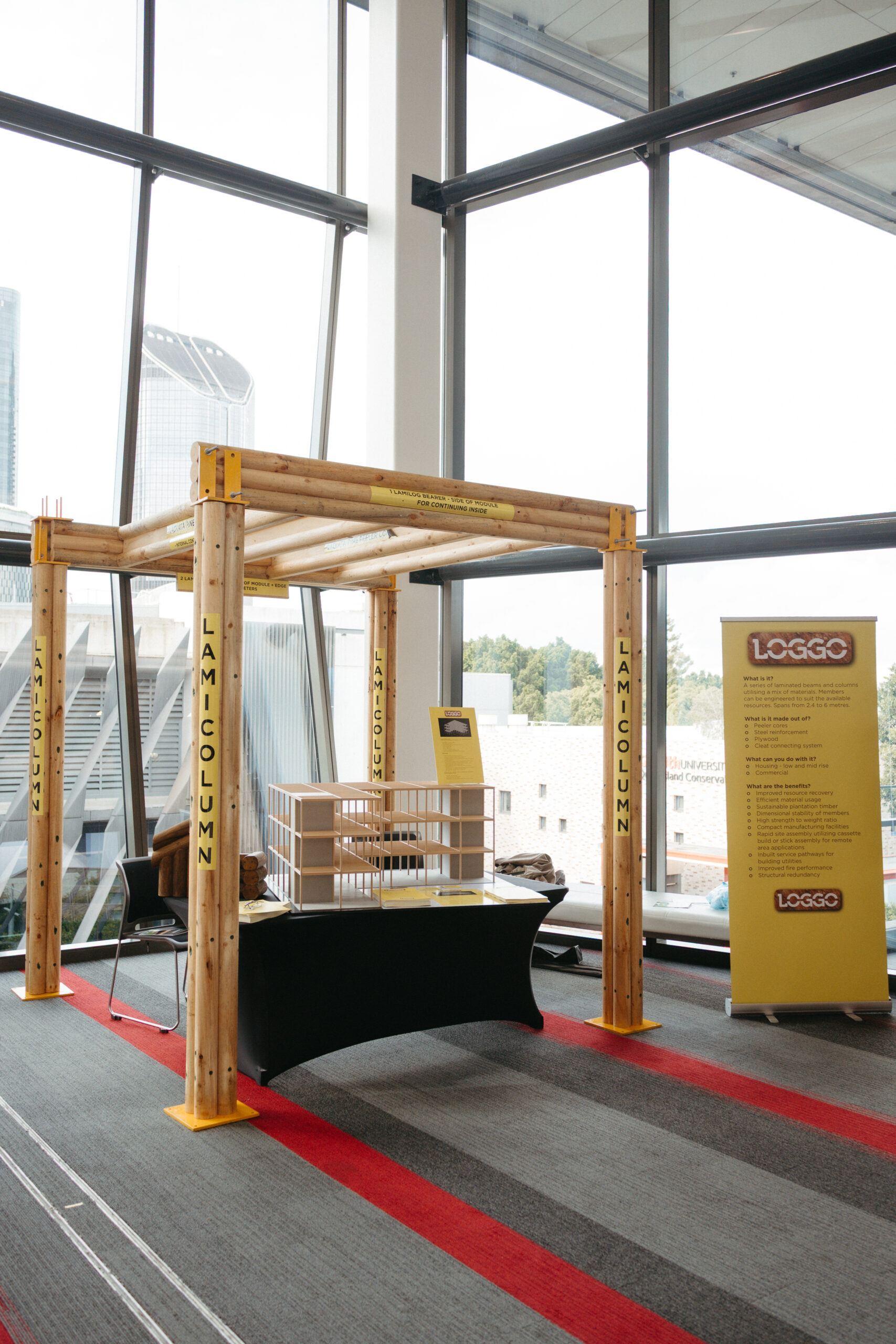
Featured photo – UQ School of Civil Engineering and ARC Advance Timber Hub stand (from left): UQ School of Civil Engineering PhD Candidates (Diluni Gardiya Manawaduge & Anastasia Jesica) with Professor Rebecca Gravina, alongside Associate Professor Joe Gattas and Kelly Rischmiller.

Bunnings Community & Sustainability Report 2025 for Responsible Timber Sourcing

The ARC Advance Timber Hub is pleased to share the positive acknowledgement of the Programme for the Endorsement of Forest Certification (PEFC) in the Bunnings Community & Sustainability Report 2025, which reinforces the growing national commitment to responsible timber sourcing and sustainable forest management.

In the report, Bunnings outlines its commitment to ensuring all timber from natural forests is sourced responsibly and certified through trusted, independent third-party schemes such as the Forest Stewardship Council® (FSC®) and PEFC. These certification systems play a vital role in strengthening sustainability standards and ensuring the traceability of timber supply chains across Australia.

While ARC Advance Timber Hub’s partner, Responsible Wood, is not mentioned directly in the report, it is important to acknowledge that Responsible Wood is the national governing body for PEFC in Australia. Through this role, Responsible Wood provides oversight, promotes sustainable forest management standards, and works closely with industry stakeholders to support national and international certification requirements

As highlighted in the report, responsible sourcing is not only a corporate priority but is also increasingly valued by the wider community. Bunnings continues to work closely with suppliers to improve sourcing practices and uses tools such as comprehensive timber surveys to ensure full transparency around the origin of timber and fibre used in their products.

To read the Bunnings Community and Sustainability Report 2025, click here.

Page 13: Responsible Timber Sourcing

Project Update: Establishing Viable Product and Market Solutions for Hardwood Plantation Thinnings and Small Diameter Logs

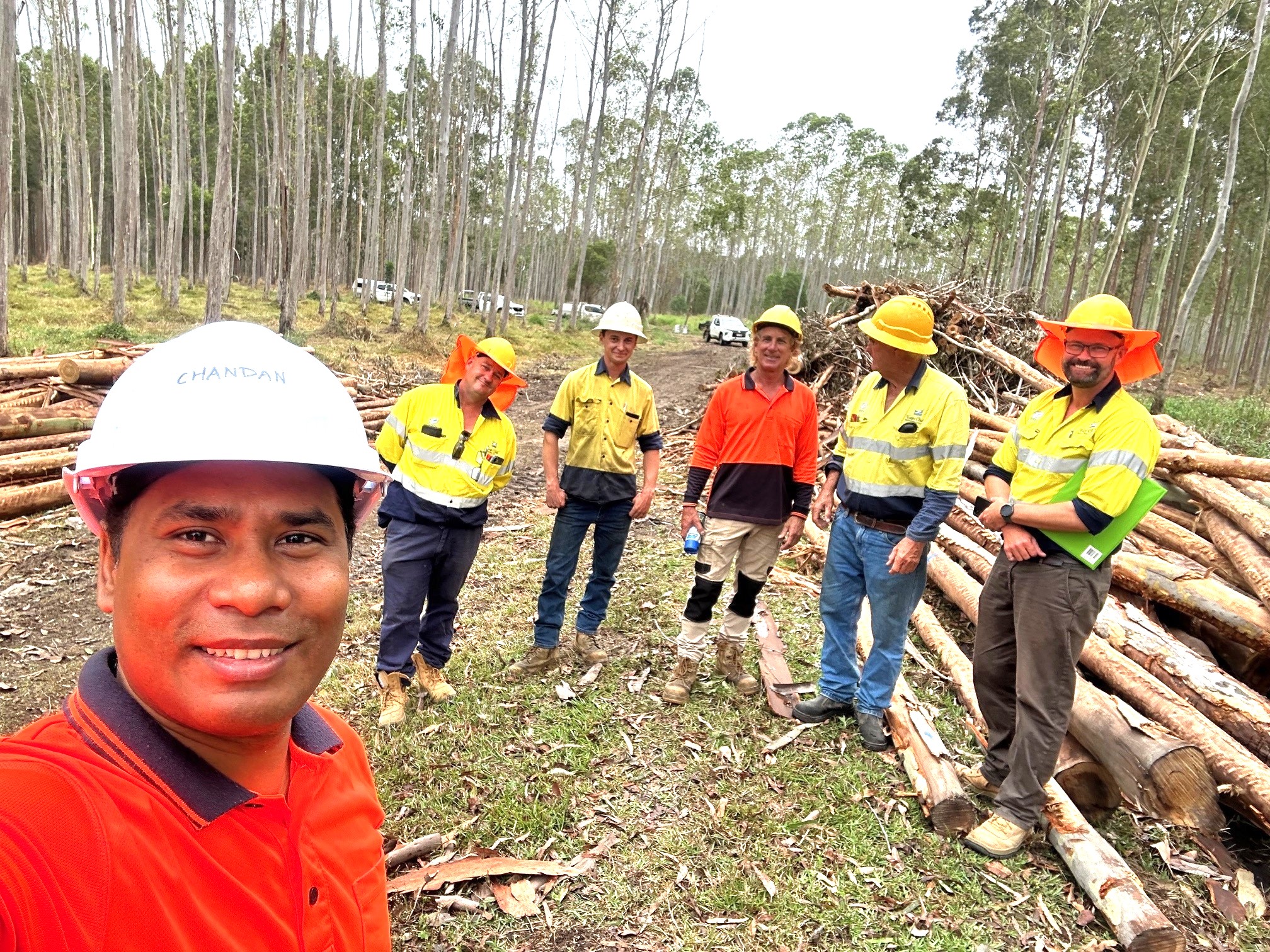
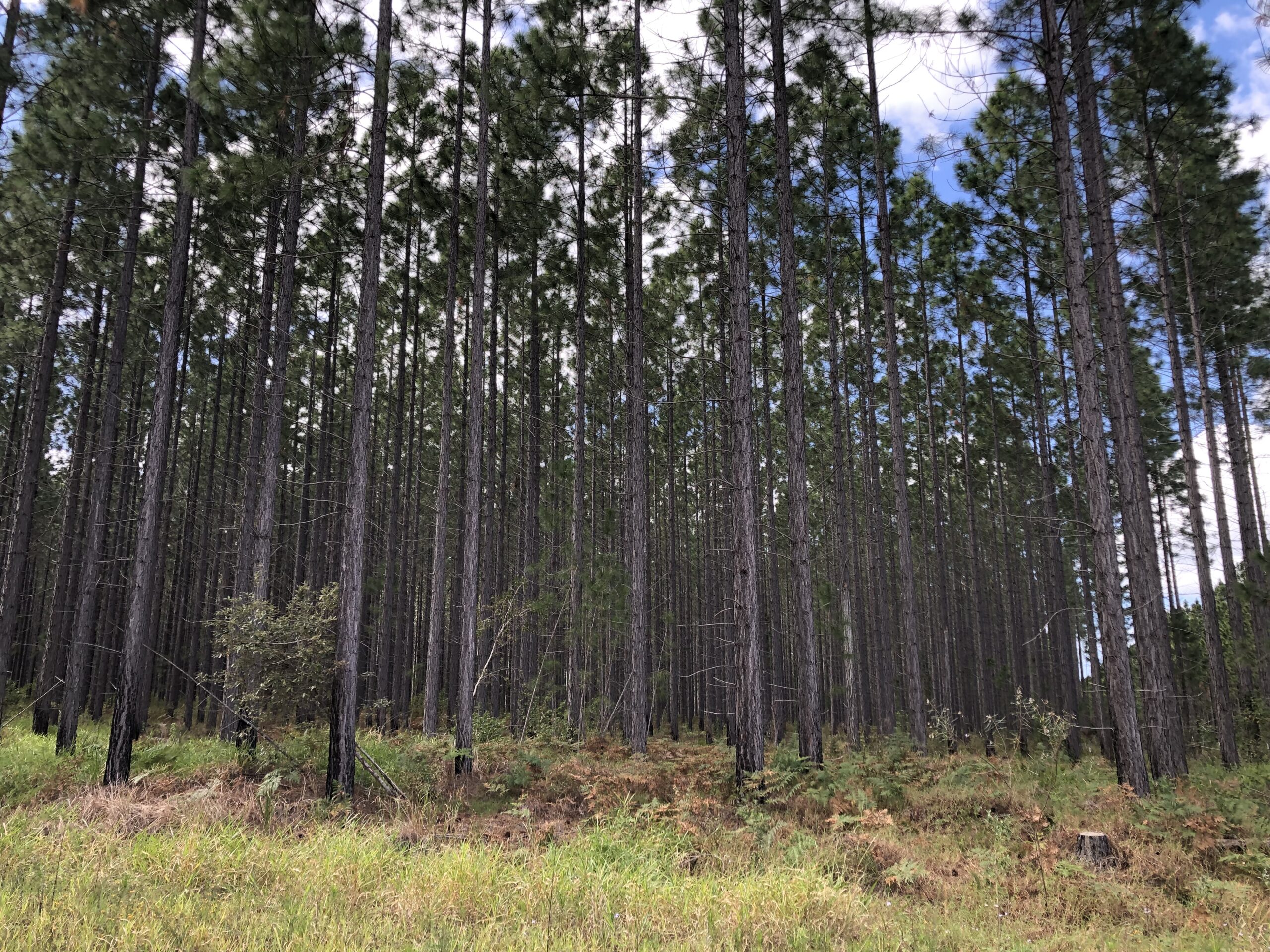
Significant progress has been made on an ARC Advance Timber Hub Project which is establishing viable product and market solutions for hardwood plantation,  led by Dr Chandan Kumar from the Queensland Department of Primary Industries (DPI), as the research team continues advancing work on developing viable product and market pathways for hardwood plantation thinnings and small-diameter logs.

In recent weeks, the project team received a truckload of logs supplied by Wide Bay Water (WBW) for use in two of the ARC Advance Timber Hub’s Value-Chain Innovation Projects – Establishing Viable Product and Market Solutions for Hardwood Plantation Thinnings and Small Diameter Logs and Adaptive Building Forms for Inventory-Constrained Utilisation of Low Value Fibre. This delivery marks an important milestone and has enabled a concentrated period of hands-on assessment and early-stage processing.

Over the past fortnight, researchers have undertaken an extensive program of work, including log merchandising, cutting sample discs, capturing non-destructive measurements, and conducting the peeling study. These activities are essential for understanding log characteristics, evaluating processing performance, and building a data foundation that will inform future product development opportunities.

WBW staff visited the research facilities this week to observe the peeling operation and gain insight into the assessment and testing underway. Their visit highlights the strong collaboration at the core of this project.

With the logs now on-site, the team has progressed to the next phase of evaluation, including sample preparation for mechanical testing, heartwood–sapwood assessment, and durability analysis. These results will help determine the most promising processing pathways and potential product streams for plantation-grown hardwoods that have historically lacked clear commercial utilisation options.

The Value-Chain Innovation projects continues to build momentum, strengthening industry–research connections and generating valuable data to support the development of future markets for this important resource.


Hub PhD Candidate, Mahdi Mazhari, receives Mitacs Globalink Research Award to support International Collaboration

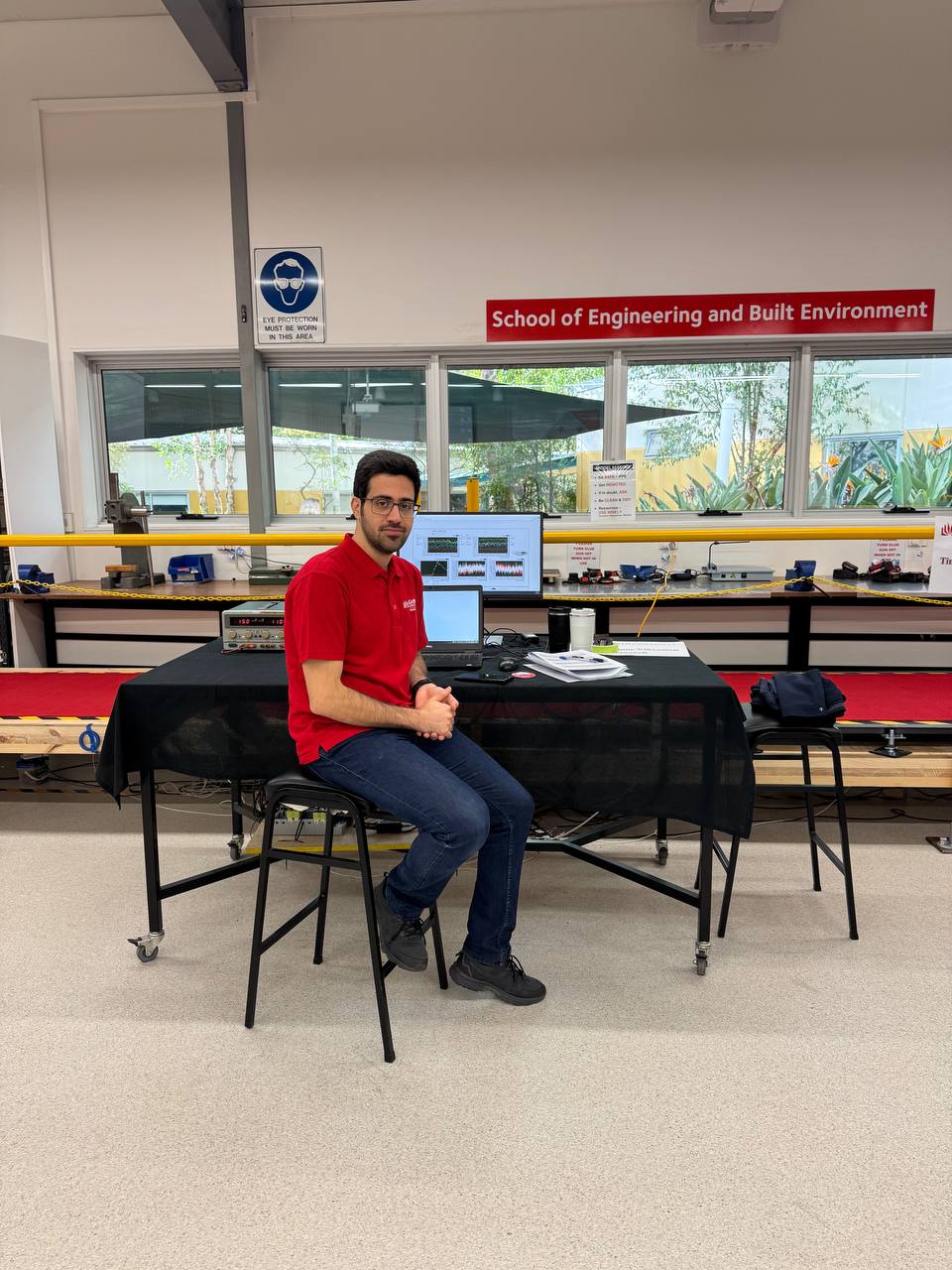
The ARC Advance Timber Hub is pleased to acknowledge the outstanding achievement of Mahdi Mazhari, a PhD candidate in Structural Engineering at Griffith University, who’s PhD is part of ARC Advance Timber Hub Research Node: Performance of Building Components, Project 1.1: Innovative Long-Span Timber and Wood-Based Hybrid Floors for Vibration Performance and Acoustic Compliance.

Mahdi has been awarded a Mitacs Globalink Research Award (GRA), enabling him to undertake a three-month research internship at the University of Victoria (UVic), Canada. This prestigious award supports high-calibre international research collaborations and will further strengthen the partnership between Griffith University and UVic within Hub Project 1.1.

Mahdi’s PhD research is led and principally supervised by A/Prof Hassan Karampour and Prof Hong Guan (Griffith University), with A/Prof Sardar Malek (University of Victoria) serving as his host supervisor during the internship.

The Mitacs GRA will enable deeper collaboration on the vibration performance of long-span timber and hybrid floor systems, shared experimental testing, advanced numerical modelling, and joint research outcomes across both institutions. The collaboration contributes to developing improved design guidance for next-generation sustainable timber and hybrid structures, supporting the ARC Advance Timber Hub’s mission to deliver high-performance, low-carbon building solutions.

The ARC Advance Timber Hub congratulates Mahdi on this accomplishment and looks forward to the valuable contributions that will emerge from this international research partnership.

Have Your Say on FWPA’s Draft Standard: Methods of Test for Mechanical Fasteners and Connectors

Forest & Wood Products Australia (FWPA) has released a draft industry standard “Methods of Test for Mechanical Fasteners and Connectors” providing an updated and reliable framework for testing and determining characteristic capacities of timber connections.

Developed through an FWPA-funded research project, the standard was supported by the Engineered Wood Products Association of Australasia (EWPAA) and undertaken by the ARC Advance Timber Hub at The University of Queensland. The project has been led by Professor Keith Crews, Hub Director, who has played a pivotal role in coordinating research and industry collaboration throughout its development.

The draft Standard offers an industry-led alternative to AS 1649:2001, establishing robust testing protocols for sawn timber and engineered wood products (EWPs) until AS 1649 is comprehensively revised. It reflects international best practice and provides consistent testing methods for assessing the structural performance of both new and existing connection systems including bolts, dowels, screws, and other fasteners.

“This project is an important step forward for Australia’s timber engineering and manufacturing sectors,” said Professor Keith Crews, Director of the ARC Advance Timber Hub.

“The development of this draft standard ensures that our industry continues to evolve with accurate, up-to-date testing methods aligned with international benchmarks. It’s been a collaborative effort across research, manufacturing, and engineering communities, and we encourage all stakeholders to review and provide their feedback to help refine and finalise this essential standard.”

The draft standard has undergone rigorous peer review and been road tested through an extensive experimental program by the ARC Advance Timber Hub.

The ARC Advance Timber Hub would like to acknowledge Professor Crews for his leadership and commitment to advancing this important work over the past six years of putting this draft together.

If you are interested in learning more or providing feedback on the draft standard, please click the link in the image below and submit your comments by 30 November 2025.

Novel Mass Timber System Showcased by Hub Partner Loggo

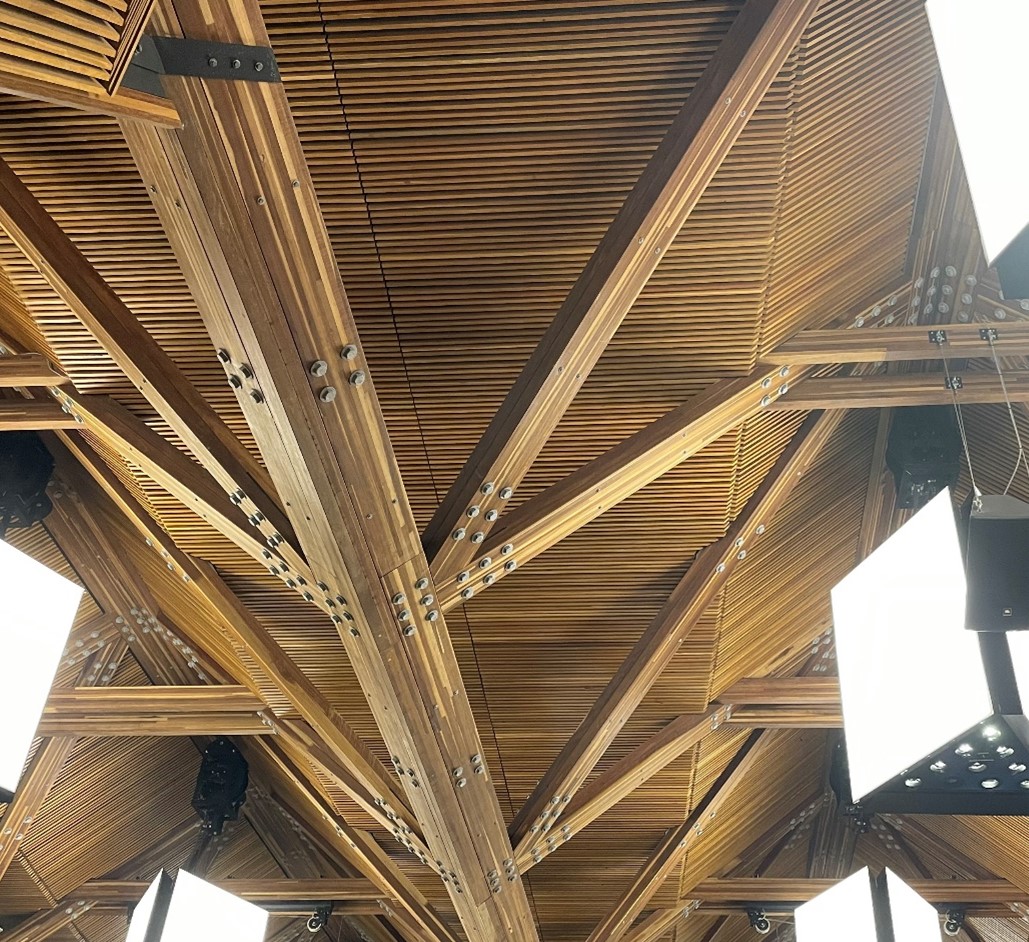
The ARC Advance Timber Hub is excited to share a recent Wood Central article highlighting the work of ARC Advance Timber Hub partner, Loggo.

The article “This Low Cost Building System Could Use Far Less Wood than CLT” explores Loggo’s  approach to developing efficient, low-cost timber building systems that optimise resource use and reduce material waste.

This work aligns with ARC Advance Timber Hub Project “Establishing Viable Product and Market Solutions for Hardwood Plantation Thinnings and Small Logs”.

The article also references the World Conference on Timber Engineering 2025 (WCTE 2025), which was hosted by the ARC Advance Timber Hub in June this year.

We encourage you to read the full article on Wood Central to learn more about Loggo’s exciting work.

WoodSolutions and Timber Insight advance sustainability

The ARC Advance Timber Hub is pleased to share an article published by Build Australia highlighting our partner Forest and Wood Products Australia (FWPA) and its WoodSolutions initiative.

The feature, WoodSolutions and Timber Insight advance sustainability, explores how WoodSolutions is supporting innovation and knowledge sharing across the timber industry to drive more sustainable construction outcomes in Western Australia.

Image courtesy of Build Australia

Timberbiz highlights new R&D funding for precinct project

The ARC Advance Timber Hub is sharing a recent article published by Timberbiz which highlights IndustryEdge’s new R&D funding for a major precinct project. This initiative aims to strengthen Australia’s timber industry through advanced data, research, and innovation — themes that strongly align with the Hub’s focus on sustainable design, advanced manufacturing, and collaboration across industry and academia.


We’re Not Sweden — Australia Must Do Prefab Housing Its Own Way

The ARC Advance Timber Hub would like to acknowledge an insightful article published by Wood Central, titled We’re Not Sweden — Australia Must Do Prefab Housing Its Own Way.as it aligns with our research under the Hub.

The article features commentary from Building 4.0 CRC CEO, Professor Mathew Aitchison, who highlights the opportunities and challenges facing Australia as it seeks to scale modular and prefabricated housing solutions. Professor Aitchison emphasises the importance of developing construction systems tailored to Australia’s unique environment, manufacturing capacity, and housing needs — rather than simply replicating international models.

Professor Keith Crews Featured in The Courier Mail: “Flatpack Village Could Build a Lasting Olympic Legacy”

The ARC Advance Timber Hub is proud to share that our Director, Professor Keith Crews, was recently featured in The Courier Mail (17 October 2025, page 5- to view the full article a subscription to The Courier Mail is required and can be viewed on this link), in an article highlighting innovative housing solutions for Brisbane 2032 and beyond.

In the article, titled “House About a Flatpack Village,” Professor Crews discusses the potential of rapid flatpack modular construction—a method described as “IKEA on steroids”—as a sustainable and efficient way to deliver housing for the Brisbane 2032 Olympic and Paralympic Games Athletes Village at the RNA Showgrounds.

Unlike traditional concrete construction, which can take up to a month to cure and reach full strength, modular housing can be assembled and disassembled in a matter of weeks using prefabricated materials. Professor Crews notes that this approach offers not only speed and efficiency during construction but also lasting value for the community after the Games.

“What we’ve been saying to the state government is this is a great opportunity to build some high-quality apartments that have a legacy life for Queensland,” Professor Crews said. “The conversion from athletes and officials’ accommodation into high-quality apartments is a relatively simple thing to do.”

As Director of the Australian Research Council’s Research Hub to Advance Timber for Australia’s Future Built Environment, Professor Crews leads more than 30 research projects exploring timber’s potential as a sustainable alternative to traditional materials such as concrete.

“Our mission is to get timber into the built environment for environmental and sustainability reasons,” he said.

The article also highlights the growing success of prefabricated construction in Australia, referencing a recent nine-storey apartment project in Spring Hill completed in just nine months; less than half the time it would take using concrete.

Professor Crews’ insights reflect the Hub’s ongoing commitment to advancing sustainable, innovative, and scalable construction solutions that support Queensland’s housing future and the nation’s transition to a low-carbon built environment.


Image courtesy of Emma Cross