Australian Timber Fire Station Wins Built by Nature Prize 2025

Fire Tower Courtesy of Christopher Frederick Jones

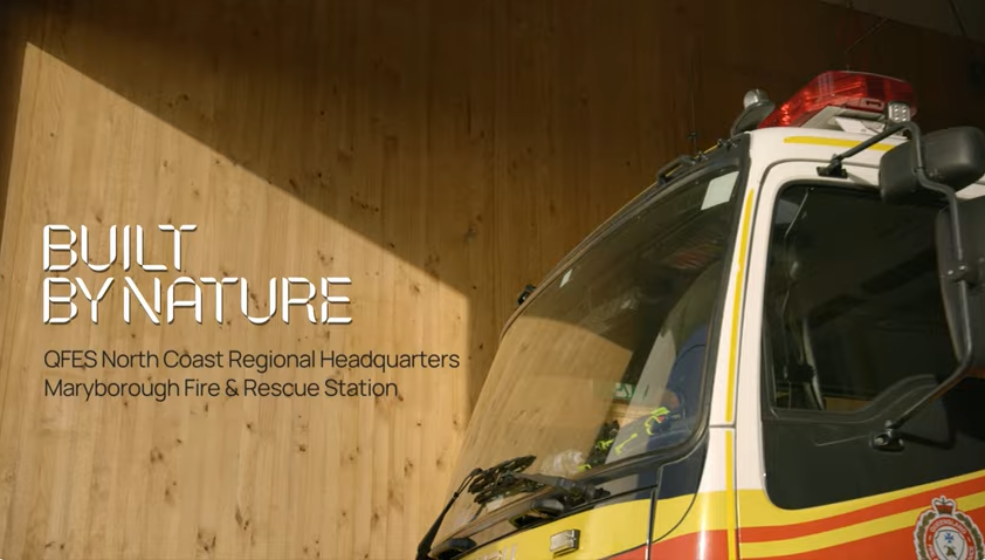
The ARC Advance Timber Hub is proud to celebrate the Queensland Fire and Emergency Services North Coast Regional Headquarters and Maryborough Fire and Rescue Station is one of six winning projects of the Built by Nature Prize 2025 — a global award recognising excellence and leadership in timber and bio-based construction.

Recognised for its exemplary integration of sustainable design, innovation, and responsible use of timber. The Built by Nature Prize celebrates projects that embody the Principles for Responsible Timber Construction — including sustainable forest management, life-cycle accountability, carbon storage potential, and the promotion of a timber building bioeconomy.

Selected from nearly 400 entries across 39 countries, 28 projects were shortlisted, and the Queensland Fire and Emergency Services North Coast Regional Headquarters and Maryborough Fire and Rescue Station project won the Public Infrastructure category.

See All Winners and Commendations

See Shortlisted Public Infrastructure Category


Architect Kim Baber Using Hyne Timber’s BIM Content

Kim Baber, Principal Architect from Baber Studio was invited to London to accept the award.

“Winning this award for the design of the building is a true honour. To be one of only six winners internationally and taking out the Public Infrastructure category is a testament to mass timber in construction which I am incredibly passionate about.

“The great thing about this building, is it is entirely practical and within budget yet showcasing exceptional sustainability credentials. It can be done when designed specifically for the benefits of mass timber.

“Getting the right project team together was essential and I thank our project partners who came together tirelessly on this project. I would especially like to thank Katie Fowden from Hyne Group who initiated and led the innovative market led proposal with the Queensland State Government. I look forward to celebrating with all involved on my return to Australia” Kim said.

Kim Baber is also a Chief Investigator of the ARC Advance Timber Hub involved in ARC Advance Timber Hub Projects in the Value-Chain Innovation Research Node – 7.1 (Project Leader), 7.2 and 7.4.

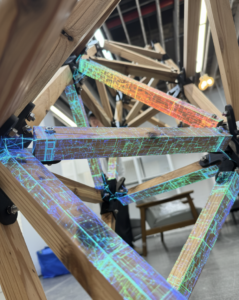
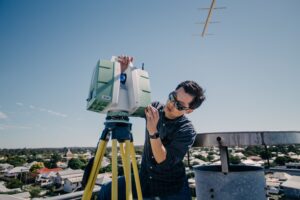
UQ School of Civil Engineering Lecturer, Dr SangHyung Ahn, and the Scanner at the top of the Maryborough Fire Tower

The Queensland Fire and Emergency Services North Coast Regional Headquarters and Maryborough Fire and Rescue Station stands as an exemplar project of The University of Queensland’s Centre for Future Timber Structures (CFTS). The CFTS worked with Baber Studio, Bligh Tanner, Hutchinson Builders, Hyne Timber, and XLam, to design this Queensland Government market led landmark project showcasing the potential of timber.⁠ The project has helped change industry perceptions and challenge initial concerns over fire safety, illustrating the potential fire safety and sustainable outcomes of timber when used in significant infrastructure.⁠

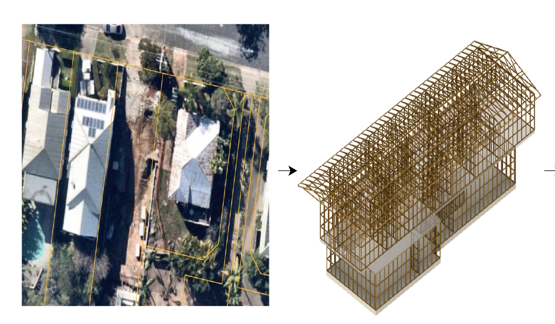
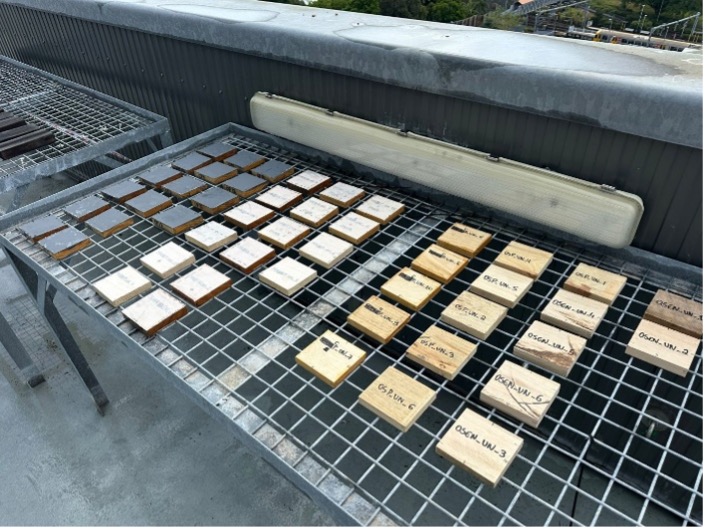
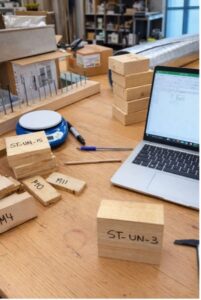
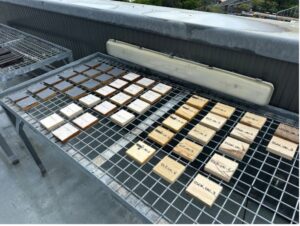
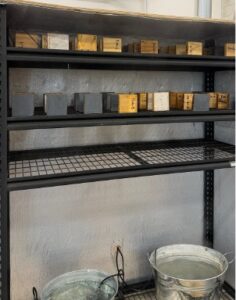
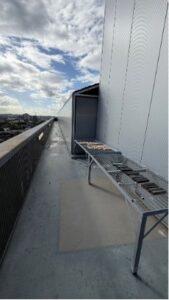
The CFTS played a key role in the project’s development, including a full 3D scan of the existing structure to inform the design process and expert guidance from the UQ Fire team, which was led by Professor José L. Torero at the time. And during the construction of the project, a moisture monitoring campaign of the innovative CLT building was set up by ARC Future Timber Hub researchers from UQ’s School of Architecture (Dr Paola Leardini) and the QLD Department of Primary Industries’ Forest Product Innovation (FPI) team (Dr Maryam Shirmohammadi and Mr Daniel Field).

Aerial Photo – Maryborough Fire Station

“This was the Southern Hemispheres first contemporary, engineered timber fire station and home to the regional operations, fully supported by fire engineering experts.

“It was strategically proposed to bust many myths about mass timber while also being located in Maryborough, aka, ‘timber city’ and our home since 1882⁠” said the Hyne Group’s General Manager, Katie Fowden.

“I would like to congratulate Kim Baber and Baber Studio for this international design recognition as well as the Queensland Government who approved the original proposal to proceed.”

⁠Established in 2015, the Centre for Future Timber Structures (CFTS) evolved into the ARC Future Timber Hub (2016–2021) and now the ARC Advance Timber Hub (2022–current) — continuing to drive world-leading research and industry collaboration to advance timber construction in Australia and beyond.

The Built by Nature Prize 2025, announced at the Built by Nature Summit in London on 16 October, highlights the world’s most responsible and innovative timber buildings — and this Australian project stands proudly among them.

For further information please see: Australian Timber Fire Station Shortlisted for Built by Nature Prize 2025 and Maryborough’s mass timber fire station wins international accolade

Our Future: A New Film by Open Planet Studios

The six winners form the core of a new film, Our Future: Built by Nature, a new documentary by Open Planet Studios. The film follows the six winning projects and the value chains behind them to understand how change can be achieved in a sector responsible for nearly 40% of global emissions.

Our Future asks a single question: how can our homes, and the way we build them, become a key to solving the climate crisis? Narrated by Kevin McCloud, the film features global perspectives and includes appearances by Sir David Attenborough and COP30 President Marina Silva. The film will be screened at the Museum of Art in São Paulo (MASP) on 8 November and officially premiere later that month at COP30 in Belém

Gallery images courtesy of Baber Studio. Photography by Christopher Frederick Jones.

ARC Advance Timber Hub Researchers Present at Osaka World Expo 2025

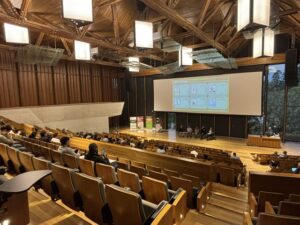
ARC Advance Timber Hub Chief Investigators A/Prof Kim Baber, Dr Lisa Ottenhaus and  A/Prof Joe Gattas,  recently represented Australia’s timber research community at the Australian Pavilion during the Osaka World Expo 2025 in Japan.

As part of the Pavilion’s Sustainability Week program, the team presented their work on sustainable and decarbonised construction, sharing insights into how timber innovation and design strategies can support a more sustainable built environment. Their presentations explored how approaches to decarbonising the construction industry differ across Australian and Japanese contexts and highlighted opportunities for future collaborative research.

The group, which also included Clarissa Brandt from Timber Queensland, participated in a series of presentations and panel sessions that brought together industry and academic leaders from both countries. This exchange was supported by the Australian Japan Foundation. 

During their time in Japan, the team also had the opportunity to visit several notable Japanese timber structures and national pavilions at the Expo, gaining valuable insights into contemporary timber architecture and design approaches.

The Osaka World Expo 2025 has been a major international event that has brought together nations, researchers, and innovators under the theme “Designing Future Society for Our Lives.” The Expo has provided a global platform for showcasing new ideas, technologies, and collaborations that aim to address sustainability challenges and shape a better future.

ARC Advance Timber Hub is proud to see its researchers contributing to this important global conversation and representing Australia’s leadership in timber innovation and sustainable construction.

“We Are Forestry” Showcases the Strength of South Australia’s Forest Industries

As part of the 150th anniversary of South Australia’s forest industries, the South Australian Forest Products Association (SAFPA) has launched a powerful new short film, We Are Forestry.

This inspiring video celebrates the people, communities, and businesses that form the backbone of South Australia’s plantation forest industries. It highlights the industry’s vital contribution to local jobs, sustainable housing, and climate solutions — reinforcing forestry’s role as The Ultimate Renewable.

The ARC Advance Timber Hub proudly supports this initiative, which shines a light on the essential role forestry plays in Australia’s sustainable future. By sharing the stories of those working across the sector, We Are Forestry reminds us of the deep connection between innovation, industry, and community.

We encourage our network to view and share the video to help amplify this important message.

🔖 Join the conversation: #SAFPA #WeAreForestry #UltimateRenewable #Forestry150

Image courtesy of SAFPA

🎥 Watch the video:

Celebrating Scion’s Recognition for Outstanding Contribution

The ARC Advance Timber Hub congratulates our partner Scion on being recognised for its outstanding contribution to forestry science and innovation.

Scion’s commitment to advancing sustainable materials, timber design, and research excellence continues to set an international benchmark. This recent recognition highlights the organisation’s leadership in driving innovation within the forestry and timber sectors — from award-winning sustainable buildings like Te Whare Nui o Tuteata to groundbreaking scientific achievements across multiple disciplines.

As a partner in advancing timber and forest-based innovation, we are particularly proud of Scion’s achievements. Their leadership helps raise the global profile of timber science and sustainable forestry, while advancing the many opportunities for wood in construction, materials, and the bioeconomy.

To learn more please see below:

Scion recognised for its outstanding contribution


ARC Advance Timber Hub Leaders present at Gottstein Trust Understanding Wood Science Course

On September 11 & 12 2025. the, ARC Advance Timber Hub (ATH) Director and 1990 Gottstein Fellowship recipient Prof Keith Crews  along with QLD DPI Forest Product Innovation Team Leader and 2024 Gottstein Fellowship recipient Adam Faircloth, were invited to present at the biennial Understanding Wood Science Course hosted by the Gottstein Trust in Canberra. The event that brings together industry, researchers, and fellows to share insights into the evolving role of timber and wood products in Australia’s built environment.

Professor Crews, delivered a presentation highlighting the intersection between novel technologies, wood design, and sustainability. He detailed how the ARC Advance Timber Hub’s work across eight nodes and 26 research projects is driving the transformation of timber into a central material for achieving a carbon-neutral built environment.

Professor Crews emphasised that the Hub’s research is not only pushing the boundaries of timber product innovation but is also directly contributing to Australia’s climate goals by demonstrating how engineered wood can replace carbon-intensive materials in construction. His address underscored the role of collaboration between academia, government, and industry in positioning timber as a cornerstone of sustainable design.

Mr Faircloth, went on to share findings from his recent international study tour, supported by the Gottstein Fellowship, see The Global Perception and Understanding of Vibration and Acoustics in Timber Structures, which is already informing the direction of Project 1.1 and Project 2.3 with Griffith University and QLD DPI. His research is helping understand the product specific factors that correspond to vibration, acoustic, damping performance on the dynamic and acoustic properties and manufacturing procedures of lightweight timber, mass timber, and hybrid floors.

Other Hub investigators who contributed as speakers at the event included:

The ARC Advance Timber Hub were proud to see several of its Partner Companies—inclusive of AKD, Aurecon, Forest & Wood Products AustraliaHyne Timber, NSW DPI and University of the Sunshine Coast supporting the course and contributing to its success.

The Gottstein Trust Fellowship, awarded annually, supports innovation and professional development within Australia’s wood products and forest industries. For decades it has provided opportunities for leaders like Crews and Faircloth to advance the science and application of timber in the built environment.

Applications for the 2025 Fellowship round are now open until 27 October 2025, inviting project submissions from professional’s keen to contribute to the future of Australia’s forest and wood products industries. To apply please click on the link. 

Images courtesy of Adam Faircloth & Gottstein Trust. 

Help Shape the Future of Hybrid Steel–Timber Systems

We invite you to take part in a short survey exploring current practices, challenges, and opportunities in hybrid steel–timber construction—particularly steel-framed buildings with timber floors.

The survey takes less than 10 minutes to complete and can be accessed here: Survey Link

This survey is part of a Royal Society-funded collaboration (IES\R1\251042) between the University of Surrey (UK) and the University of British Columbia (Canada). The project aims to capture region-specific insights into design, detailing, and construction, while also developing a shared database of steel–timber floor tests and numerical models. This database will support the creation of future design guidelines for these innovative systems.

The University of British Columbia is a partner of the ARC Advance Timber Hub, contributing to research projects such as:

All responses are anonymous. However, participants may choose to leave their email address to receive project updates and a complimentary copy of the recent 300-page state-of-the-art review on steel–timber–(concrete) structures.

If you could also please share this invitation with colleagues who may be interested. Thank you for your time and support in advancing sustainable construction practices.

Arup to Lead Brisbane 2032 Victoria Park Masterplan – Continues Commitment to Sustainable Innovation

The ARC Advance Timber Hub congratulates its partner Arup, recently appointed by the Queensland Government to lead the integrated masterplan for the Victoria Park Precinct, a flagship project for the Brisbane 2032 Olympic and Paralympic Games.

The revitalised precinct will feature the future Brisbane Stadium, a new National Aquatic Centre and the Athletes’ Village, establishing a vibrant destination for sport, recreation and community life. During the Games, Victoria Park will host the opening and closing ceremonies, with the Athletes’ Village accommodating more than 10,000 athletes and officials during the Olympics and over 5,000 during the Paralympics.

Arup & Timber Innovation: From ARC Future Timber Hub to Advance Timber Hub

Beyond their role in sports and precinct infrastructure, Arup has long been engaged in timber research and innovation in Australia. Arup was a formal partner of the ARC Future Timber Hub from 2016 to 2021, contributing to collaborative research into the viability of substituting EWP for steel and concrete in mid-rise buildings to drive down construction costs, improve occupant satisfaction and deliver healthy, low-carbon buildings.

Today, Arup continues that tradition as a partner of the ARC Advance Timber Hub, and are currently involved in 5 projects that are underway at the hub. Their involvement underscores a commitment not just to iconic urban design, but to sustainable, material-led innovation for the built environment.

Image courtesy of the Queensland Government

For further information on the Brisbane 2032 Victoria Park Masterplan, please see below links:
Architecture AU: https://architectureau.com/articles/global-design-firm-appointed-to-lead-brisbane-2032-victoria-park-masterplan/
ARUP: https://www.arup.com/news/arup-to-lead-victoria-park-masterplan-for-brisbane-2032-games-precinct/
Queensland Government: https://statements.qld.gov.au/statements/103537
The Urban Developer: https://www.theurbandeveloper.com/articles/brisbane-games-victoria-park-precinct-contractor-revealed-qld

Arup are a champion on the built environment and have published a number of articles on their website which can be seen in the below link:
https://www.arup.com/insights/

One article of note can be found in the below link, “Rethinking Timber Buildings”
https://www.arup.com/insights/rethinking-timber-buildings/

Designing Long-Span CLT Floors: Why Under-Floor Insulation Matters for Soundproofing

The ARC Advance Timber Hub is pleased to highlight a recent blog article from our industry partner, Rothoblaas. This article aligns with the Hub’s Research Node on Performance of Building Components and directly relates to Project Innovative Long-Span Timber and Wood-Based Hybrid Floors for Vibration Performance and Acoustic Compliance, led by Griffith University. The project investigates how different fastening configurations and resilient under-floor insulation (soundproofing) solutions interact to influence vibration behaviour and acoustic comfort in CLT floors.

The ARC Advance Timber Hub is proud to lead this work, supporting the growth of Australia’s timber construction sector through high-quality, applied research.

Image courtesy of Rothoblaas.


Australian Timber Fire Station Shortlisted for Built by Nature Prize 2025

The ARC Advance Timber Hub is proud to advise that the Queensland Fire and Emergency Services North Coast Regional Headquarters and Maryborough Fire and Rescue Station, which is an exemplar project by The University of Queensland Centre for Future Timber Structures, has been shortlisted for the Built by Nature Prize 2025, celebrating the projects and people driving a global transformation in timber and bio-based construction.

This prize celebrates responsible timber construction around the world, and is open to completed buildings predominantly made of timber and bio-based materials.  “We are honoured to be among the 28 shortlisted projects, selected from nearly 400 applications across 39 countries and jurisdictions”, said Kim Baber, who is the principal architect for the project from Baber Studio and Chief Investigator of the ARC Advance Timber Hub.

The 28 shortlisted projects were assessed against the Principles for Responsible Timber Construction—a common language and global framework to ensure that increased demand for wood is managed responsibly.

These principles are:

-Extending the life of existing buildings
-Accounting for Whole Life Cycle
-Ensuring Sustainable Forest Management
-Maximising the carbon storage potential of wood
-Promoting a timber building bioeconomy

The projects reflect a wide range of typologies—from housing, education, and workplaces to industrial facilities and public infrastructure—demonstrating the diversity and innovation in today’s timber construction sector.

From these projects, six winners and six commendations will be revealed at the Built by Nature Summit in London on 16 October.

Centre for Future Timber Structures

The Centre for Future Timber Structures (CFTS) was established in 2015 through a partnership between the Queensland Government Department of Agriculture & Fisheries (now known as the Queensland Government Department of Primary Industries) and The University of Queensland (UQ). This initiative grew into the Australian Research Council (ARC) Future Timber Hub (2016-2021) and now the ARC Advance Timber Hub (2023 to current).

Queensland Fire and Emergency Services North Coast Regional Headquarters and Maryborough Fire and Rescue Station

The Queensland Fire and Emergency Services North Coast Regional Headquarters and Maryborough Fire and Rescue Station is considered an exemplar project by UQ’s Centre for Future Timber Structures which carried out a full 3D scan of the existing structure bringing a range of intellectual property to the design team.

The principal architect for the project is Kim Baber of Baber Studio.  Mr Baber, was also involved in the project as a Chief Investigator (CI) of the CFTS / ARC Future Timber Hub (representing UQ), and is now a CI for the ARC Advance Timber Hub. As of July 2025 he is now a CI of the ARC Advance Timber Hub, representing Bond University.

Professor Carlo Prato, former Head of the UQ School of Civil Engineering, emphasised during the official opening of the site back in April 2021, how the project embodies the immense potential for success that the CFTS pursues, “I cannot think of a better example of the heights that industry and research institutions can achieve when they join forces to pursue their dreams of making sustainable buildings a reality. And similarly, I cannot think of a better symbol of the importance of having architects and engineers work together to the design of the future of sustainable built environment.”

Help shape the future of Timber Construction

No matter what your role is, if you are associated with forestry, timber, construction or the built environment we want you to help shape the future of timber construction through this short SURVEY!

Just scan the QR code below or click SURVEY and in the time it takes to drink your coffee you can share your experience and views to shape the future of Engineered Wood Products (EWPs).

🕒 The survey takes approximately 10 minutes – survey closes end of 2025

What is the survey about: A global survey that explores the barriers, enablers, and motivators influencing the adoption of Engineered Wood Products (EWPs).

Who should do the survey: The survey seeks to understand the whole supply chain so is designed for architects, engineers, builders, policymakers, investors, planners, or any other part of the EWP supply chain. For further information, please see ARC Advance Timber Hub Project “Status, Perceptions and Priorities of EWP Industry in Australia“.

What if I haven’t used EWPs or are not sure what they are: We still want to hear from you. Whether you’re an expert in EWPs, haven’t used them before or are not quite sure what they are, your experience and views are important and will make a difference to the future of timber construction.

The research will:

✔ Inform policies, processes and investment for EWP supply and adoption; and
✔ Support the achievement of sustainable construction and circular economy goals

Grab a cuppa, take the survey and share your insights to accelerate the adoption of Engineered Wood Products (EWPs).

Featured Photo: Boola Katitjin, photo courtesy of K Rischmiller